
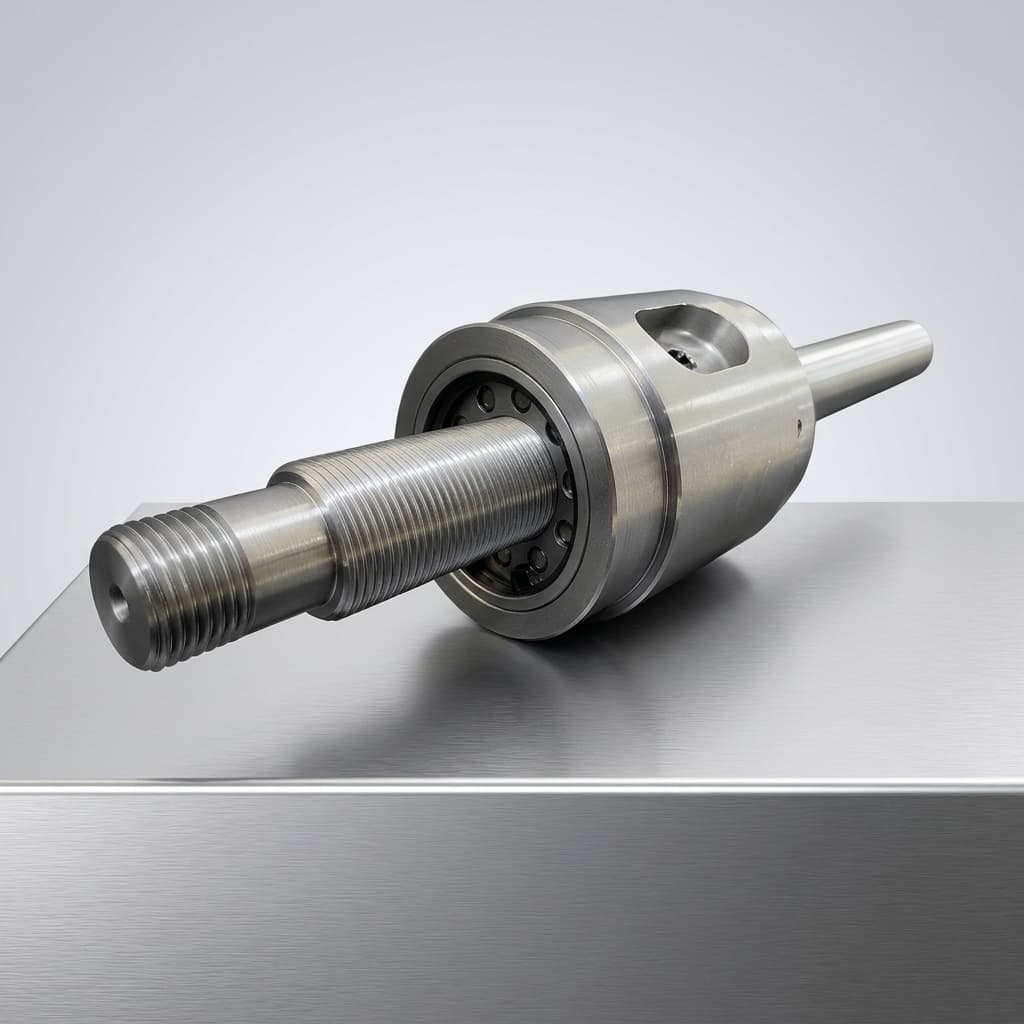
Planetary Roller Screw Actuators in Servo Press Applications: Sizing and Selection
Learn why planetary roller screw actuators are commonly specified for servo press machines. We cover force distribution, shock tolerance, and key sizing parameters for precision joining and forming.
The servo press industry is growing as automotive manufacturers and electronics assemblers demand tighter quality control, better data capture, and higher energy efficiency in joining and forming processes. At the heart of every high-end servo press is the mechanical linear actuator responsible for the pressing force.
For these high-stress applications, the planetary roller screw actuator is a common high-performance choice. Here is why roller screws are frequently specified in servo press designs, and how to calculate the equivalent dynamic load for your press project.
1. The Unique Demands of Servo Pressing
A servo press operation is mechanically brutal. Unlike a simple pick-and-place linear actuator or a CNC feed axis, a press actuator must endure:
- Extreme Peak Forces: The actuator often needs peak thrust near the forming portion of the stroke (e.g., during a riveting, clinching, or coining operation).
- Shock Loads & Structural Deflection: The sudden impact of the tooling contacting the workpiece sends severe shock waves back through the mechanical drivetrain, testing the axial rigidity of the entire system.
- Controlled Position Under Load: To form the joint without damaging the substrate, the actuator must maintain controlled displacement and force while under compression.
- Continuous Duty Cycles: In high-volume assembly, the press may run thousands of cycles per shift, requiring excellent thermal management and fatigue resistance.
2. Why Ball Screws Fail in Press Applications
Many engineers initially attempt to specify ball screws for pressing applications to save upfront costs. However, ball screws utilize recirculating steel balls that make point contact with the raceways.
When subjected to the extreme impact forces of a pressing operation, these concentrated point loads can cause the balls to exceed the yield strength of the steel, literally denting the raceway—a permanent failure mode known as brinelling.
The Brinelling Failure Mode
Once true brinelling or false brinelling occurs in a ball screw, the damage is usually irreversible. The actuator can lose positional precision, generate excessive noise and heat, and continue wearing through spalling.
3. The Planetary Roller Screw Solution
Planetary roller screws handle the abuse of servo pressing by design. Instead of recirculating balls, they use multiple threaded rollers arranged in a planetary configuration around the main screw shaft.
This design offers three mechanical advantages:
- Larger Contact Area: The line contact of the threaded rollers provides substantially more surface area to distribute pressing force compared with a ball screw. This reduces brinelling risk when the actuator is sized, mounted, and lubricated correctly.
- High Force Density: Roller screws can achieve substantially higher dynamic load ratings than ball screws of similar diameter, allowing a more compact press frame when the full load case supports it.
- Exceptional Rigidity: The dense mechanical engagement between the rollers, the nut, and the shaft results in a highly rigid drivetrain. This stiffness (k) is critical for achieving linear and predictable force-displacement curves during the pressing cycle.
4. Key Sizing Parameters for Servo Press Actuators
When selecting a roller screw actuator for a servo press, you must move beyond simply looking at the catalog's "maximum static force." Consider these essential parameters:
Equivalent Dynamic Load (Pm)
A press cycle involves varying forces at varying speeds (e.g., fast approach, slow press, fast retract). You must calculate the Cubic Mean Load across the entire cycle to accurately predict the L₁₀ lifespan.
The formula for Equivalent Dynamic Load is:
Pm = ³√ [ (F₁³·n₁·t₁ + F₂³·n₂·t₂ + ... + Fn³·nn·tn) / (nm·t_total) ]
(Where F is axial load, n is rotational speed, and t is the time duration of each phase).
By accurately calculating Pm, you reduce the risk of oversizing the motor while still checking the screw mechanics against the required cycle life.
Servo Press Acceptance Criteria Table
| Acceptance Item | Define Before RFQ | Why It Matters |
|---|---|---|
| Peak press force and hold time | kN target, tolerance, dwell duration | Sets screw load rating, motor torque, and brake behavior. |
| Force-displacement curve | OK/NOK windows and sample trace examples | Determines load-cell need and controller data strategy. |
| Approach, press, and return speed | Full cycle timing and takt target | Drives lead selection, motor speed, and thermal load. |
| Position repeatability | Press depth or part-stack tolerance | Defines preload, backlash, frame stiffness, and guide requirements. |
| Frame and tooling stiffness | Ram guidance, tool alignment, and deflection limit | Prevents blaming actuator repeatability for machine compliance. |
| Calibration and records | Load-cell location, calibration interval, part ID | Makes production traceability audit-ready. |
For actuator family selection, compare the servo electric cylinder and roller screw actuator pages. For application risk and RFQ inputs, use the servo press and joining solution.
Maximum Axial Play (Backlash)
For precision joining, backlash must be minimized. Specify a roller screw with preloaded nuts if bidirectional force control, tensioning, or extreme positional accuracy is required.
Motor and Drivetrain Integration
The servo motor must be properly matched to the screw's lead (pitch) and rotor inertia.
- Inline Configuration: A direct-drive inline coupling minimizes compliance and maximizes dynamic response.
- Parallel Configuration: Using a timing belt saves overall length, but the belt elasticity must be factored into the control loop tuning.
Data Acquisition and Force-Displacement Signatures
One of the greatest advantages of an electromechanical servo press over a hydraulic press is the ability to generate a highly precise, real-time force-displacement signature for every single part produced.
Ideal Force-Displacement Signature (Press-Fit)
- Motor Current Sensing: For less critical applications, the force can be extrapolated from the servo drive's torque (current) output. However, this method is susceptible to inaccuracies due to the variable mechanical friction of the screw over time.
- Integrated Load Cells: For applications needing higher traceability, a piezo-electric or strain-gauge load cell can be integrated in the load path between the roller screw nut and the press ram. This reduces friction-related error and gives a better calibrated estimate of applied tooling force.
Lubrication Strategies for High-Speed Pressing
Because a roller screw has a massive internal surface area undergoing line contact, lubrication is the lifeblood of the actuator. In high-volume servo presses running at 60+ strokes per minute:
- NLGI Grade 2 Grease: Standard for most applications. However, at extreme duty cycles, grease can be pushed out of the load zone (channeling) or overheat.
- Continuous Oil Bath / Oil Circulation: For the most demanding servo presses, the roller screw may be housed in a sealed chamber with circulating oil. This can improve lubrication and heat removal, but it must be reviewed with sealing, maintenance, contamination, and temperature-rise requirements.
6. Field Application Snapshot: Automotive Bearing Press
To illustrate the decision logic, consider a representative automotive bearing press upgrade.
- The Challenge: The hydraulic press suffered from temperature-induced viscosity changes, causing inconsistent pressing forces during startup and shift changes.
- The Solution: A roller screw actuator package paired with a servo drive and inline load cell.
- The Validation Plan: Compare force-displacement curves, press depth, heat rise, cycle rate, rejected-part windows, and energy use before and after the retrofit. Treat final ROI as project-specific rather than a universal percentage.
7. Partner with an OEM Expert
Designing a servo press requires careful balancing of mechanical, electrical, and closed-loop control parameters. A properly sized planetary roller screw actuator can improve rigidity and robustness, but it still needs validation against the full press cycle.
We specialize in customizing roller screw actuators for high-force pressing applications, including custom mounting flanges, integrated load-cell provisions, and matched servo interfaces. Review the engineering sizing checklist, then reach out to our engineering team with your press application parameters.
Author

Categories
More Posts
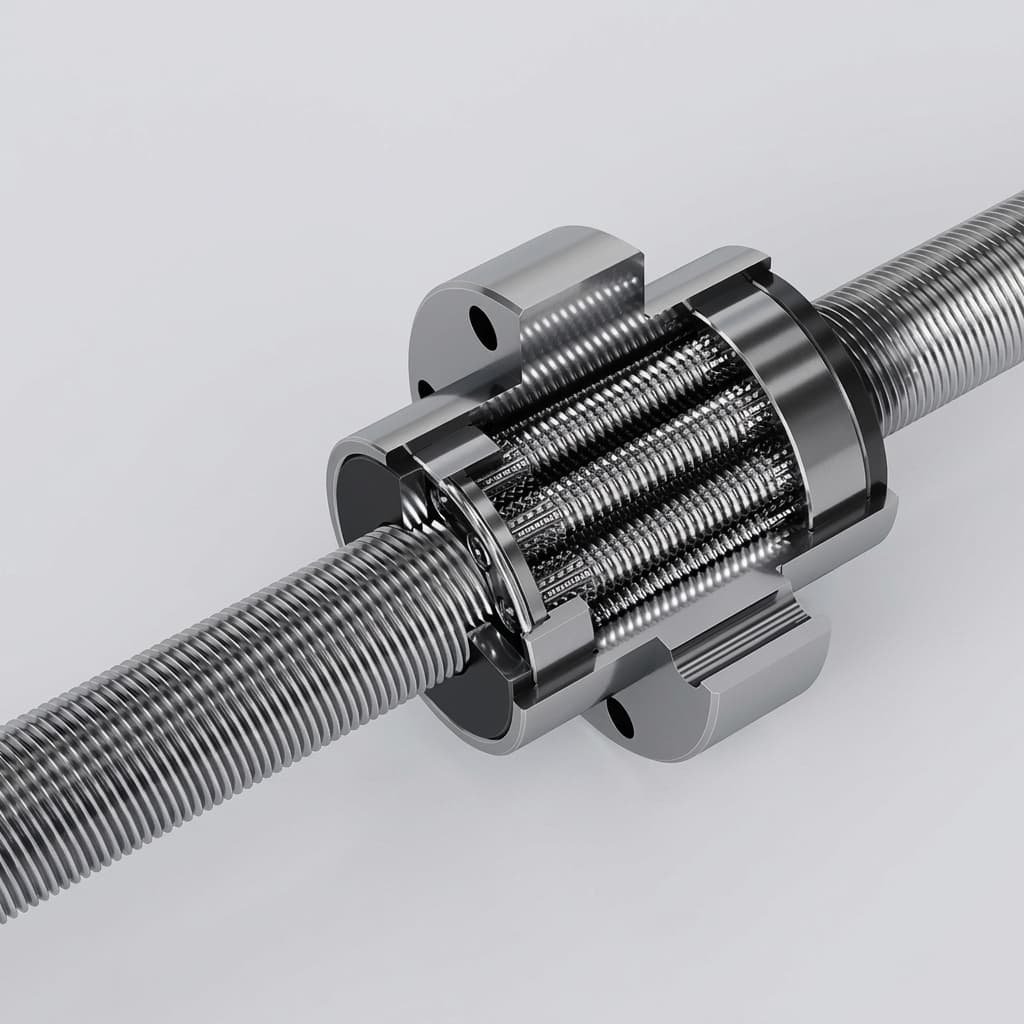
How to Write an RFQ for a Roller Screw Actuator: Sizing, Specs, and Procurement Guide
Use this roller screw actuator RFQ guide to specify load, motion profile, duty cycle, life, environment, and supplier questions before procurement review.
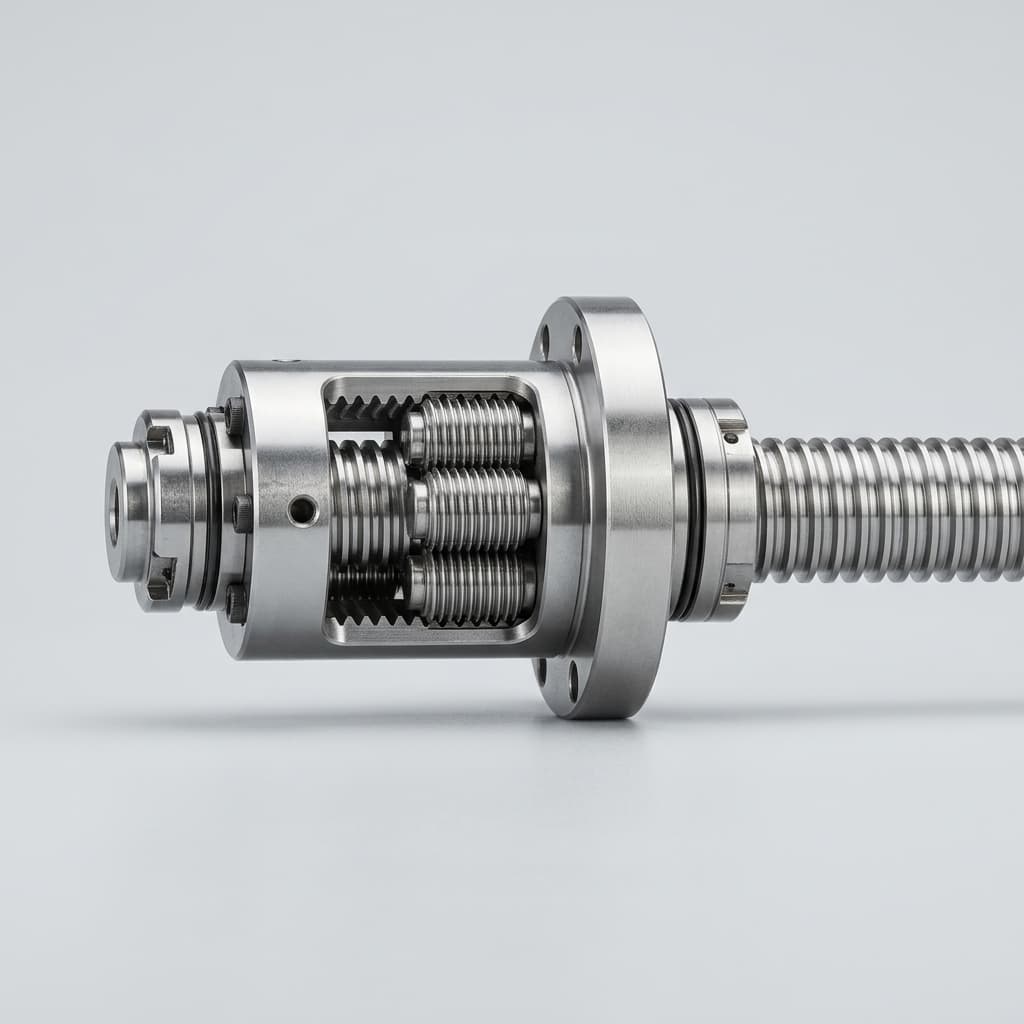
Roller Screw vs. Ball Screw: Which Linear Actuator is Right for Your Application?
A comprehensive engineering comparison of roller screws and ball screws, focusing on load capacity, lifespan, speed, and typical use cases in industrial automation.
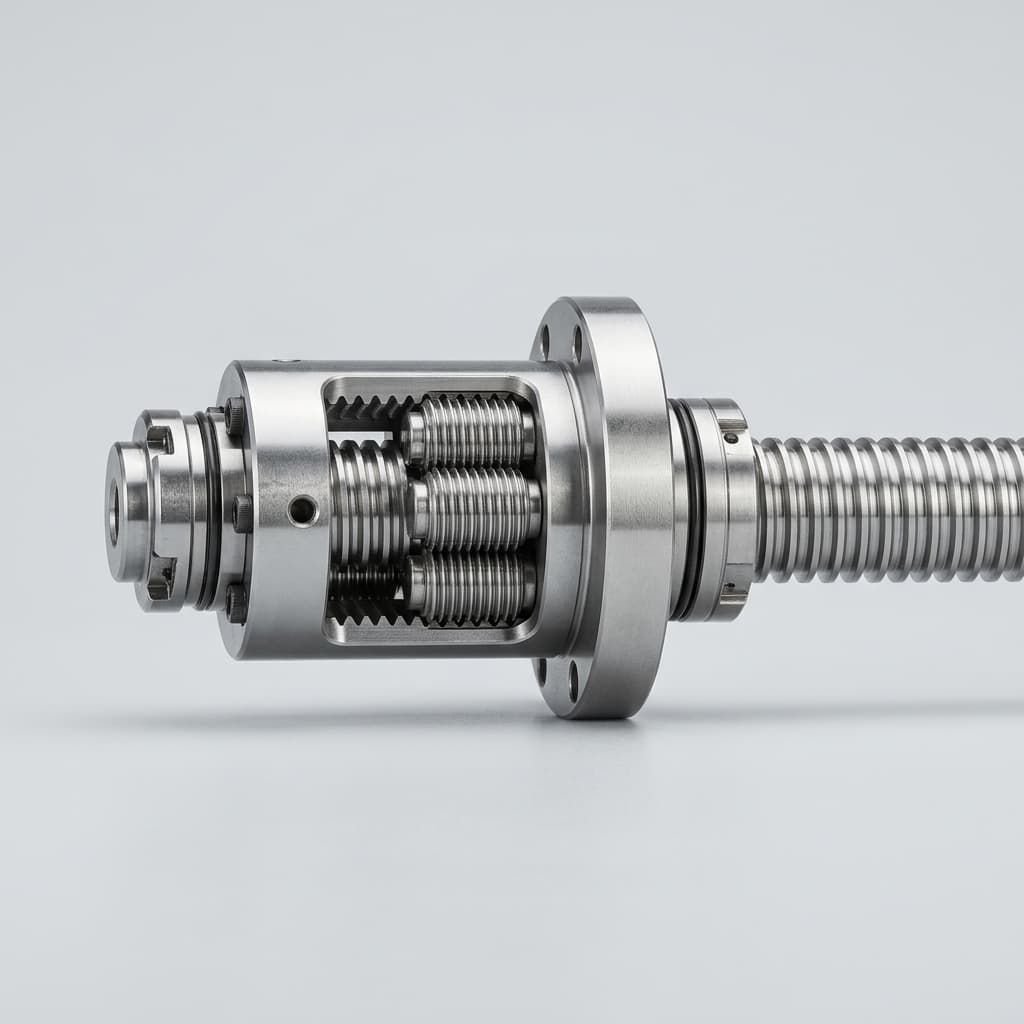
How to Audit and Select a Planetary Roller Screw Manufacturer: A 2026 Procurement Guide
Audit planetary roller screw manufacturers in 2026: verify load ratings, grinding control, testing proof, lead-time risk, TCO, and RFQ package readiness.