
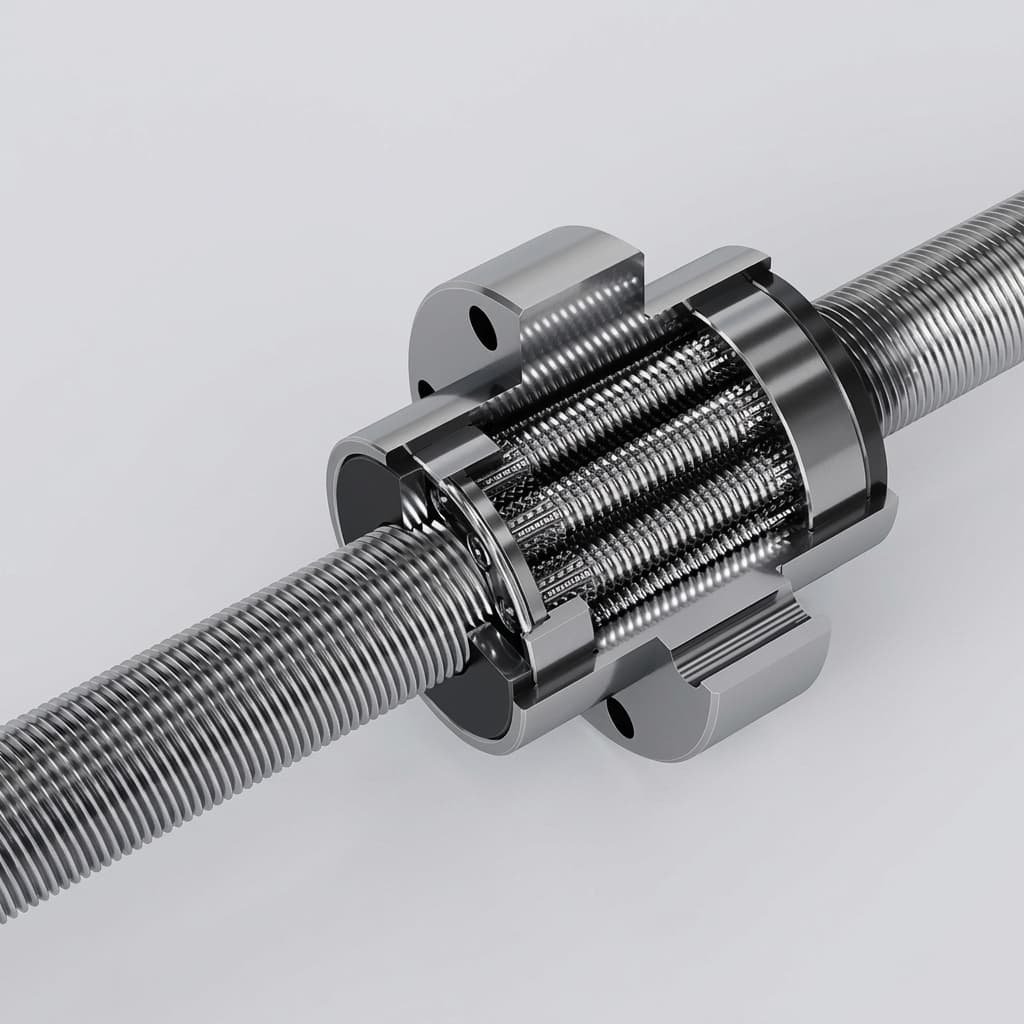
How to Write an RFQ for a Roller Screw Actuator: Sizing, Specs, and Procurement Guide
Use this roller screw actuator RFQ guide to specify load, motion profile, duty cycle, life, environment, and supplier questions before procurement review.
When transitioning a machine design from hydraulic cylinders or standard ball screws to high-performance electromechanical actuators, engineering and procurement teams often struggle during the sourcing phase. A Request for Quote (RFQ) that lacks specific dynamic parameters, or one that blindly copies legacy hydraulic safety factors, invariably leads to massive over-engineering, exorbitant costs, and extended lead times.
Because planetary roller screw actuators offer exceptional force density and fatigue life, specifying them requires a completely different approach than buying standard pneumatic or hydraulic cylinders.
Bottom Line up Front (BLUF): To get an accurate quote and avoid costly redesigns, your RFQ must explicitly detail the complete motion profile (not just peak force), the exact duty cycle, the required L10 fatigue life, and the environmental constraints. Failing to provide RMS (Root Mean Square) force calculations will force suppliers to size the actuator based on worst-case peak loads, driving up the cost of both the roller screw and the paired servo motor.
This guide provides a comprehensive framework and checklist for buyers, procurement teams, and engineers to construct an ironclad RFQ for roller screw actuators. By standardizing the data you provide to suppliers, you accelerate the sourcing process, reduce ambiguity, and ensure the final product meets your operational and financial requirements.
(Last Updated: July 2026)
1. The Costly Mistake: The "Hydraulic Translation" Error
The most frequent mistake procurement teams make when requesting quotes for roller screw actuators is simply passing along the specifications of an existing hydraulic cylinder. This is known as the "hydraulic translation" error.
Hydraulic systems are fundamentally governed by fluid pressure and piston area. When a hydraulic cylinder is undersized, it simply stalls. To prevent this, mechanical engineers typically apply generous safety factors—sometimes 2x or 3x the actual required force. If an application requires 50 kN of force, they might specify a 100 kN hydraulic cylinder because fluid power is relatively cheap to scale up.
If a buyer submits an RFQ for a "100 kN electric actuator" when the actual application only requires a peak of 50 kN, the supplier will size a massive planetary roller screw and pair it with an enormous servo motor and drive. Unlike hydraulics, scaling up electromechanical systems is expensive. The resulting quote will be shockingly high, often causing management to abandon the electrification project altogether.
To avoid this, your RFQ must specify the actual required load, clearly differentiating between the peak force needed for acceleration/shock and the continuous RMS force required during standard operation.
2. The Core RFQ Specification Table
A professional RFQ removes guesswork. Below is the structured data that should be included in every inquiry submitted to a roller screw actuator manufacturer.
| Specification Category | Parameter | Description | Importance |
|---|---|---|---|
| Load Requirements | Peak Load (kN) | The maximum force required, typically during acceleration, deceleration, or shock events. | Critical (Dictates static capacity & motor torque limit) |
| Load Requirements | RMS Load / Equivalent Load (kN) | The time-weighted average force over the entire cycle. | Critical (Dictates L10 fatigue life & motor thermal limit) |
| Motion Profile | Stroke Length (mm) | The exact travel distance required, plus any safety over-travel margin. | Critical (Dictates screw length & critical speed limits) |
| Motion Profile | Max Velocity (mm/s) | The highest linear speed required during the cycle. | Critical (Dictates screw lead & motor RPM) |
| Performance | Duty Cycle (%) | The percentage of time the actuator is moving versus resting within a complete machine cycle. | Critical (Dictates thermal management & lubrication needs) |
| Performance | Target Life (Cycles/Hours) | The required operational lifespan of the machine before replacement or major overhaul. | High (Determines the dynamic load rating $C$ required) |
| Integration | Available Envelope (mm) | Maximum allowable dimensions (Length x Width x Height) for the actuator and motor assembly. | High (Dictates inline vs. parallel motor mount, or standard vs. inverted architecture) |
| Environment | Operating Temp & IP Rating | Ambient temperatures, washdown requirements, dust exposure, and sealing standards. | High (Dictates seals, coatings, and grease selection) |
Procurement Tip: Do not hide the constraints. If your budget for the axis is severely limited, or if you have a strict space constraint, state it upfront. Suppliers can often optimize the lead (thread pitch) or motor mounting architecture to meet space or cost constraints, but only if they know about them early in the quoting process.
3. Defining the Load and Motion Profile
The heart of sizing a roller screw actuator is the motion profile. While ball screws might survive ambiguous sizing, roller screws are typically deployed in extreme applications where assumptions lead to premature failure.
Quantifying Peak vs. RMS Loads
Peak load is the maximum force the actuator must exert. It determines the required static load rating ($C_0$) of the roller screw to prevent brinelling (permanent deformation of the threads) and the peak current required from the servo drive.
However, the RMS (Root Mean Square) load is far more critical for continuous operation. The RMS load is the time-weighted average force that the actuator experiences during its entire cycle, including acceleration, constant velocity, deceleration, and dwell (rest) times. Suppliers use the RMS load to calculate the theoretical $L_10$ fatigue life of the roller screw mechanism. Providing a detailed cycle diagram (Force vs. Time and Velocity vs. Time) is the single best way to ensure an accurate quote.
Stroke Length and Critical Speed
The stroke length affects more than just the physical dimensions. As a standard planetary roller screw gets longer, its maximum safe rotating speed decreases due to the risk of "whirling" or resonant vibration (critical speed). If your application requires both a long stroke (e.g., > 1.5 meters) and high velocity, the supplier may need to increase the screw diameter or pitch solely to prevent shaft vibration, which will affect the final cost.
4. Architectural and Spatial Constraints
When replacing hydraulics, space is often highly constrained. A hydraulic cylinder is extremely compact for its force output because the "motor" (the hydraulic pump) is located elsewhere. An electromechanical actuator must house the screw, the nut, the bearings, and the servo motor all at the point of action.
Your RFQ should specify how much space is available and whether you prefer an inline motor configuration or a parallel (belt-driven or geared) configuration.
If space is severely restricted, you should ask the supplier to evaluate whether an Inverted Planetary Roller Screw (IPRS) architecture would be more suitable. In an IPRS design, the nut rotates and the pushrod translates, allowing the motor to be integrated directly around the nut. This creates the most compact footprint possible but may have tradeoffs in maximum stroke length.
5. Duty Cycle and Thermal Management
Duty cycle is highly misunderstood in purchasing. It is not just about "how often the machine is on." It is the ratio of active motion time to total cycle time.
A high-duty-cycle application (e.g., greater than 50%) generates significant heat. Roller screws have multiple friction points (rollers engaging the nut and the shaft simultaneously). Under heavy continuous loads, this friction creates thermal expansion. If heat cannot be dissipated, the lubricant degrades rapidly, and the thermal expansion of the steel components can lead to binding or sudden catastrophic failure.
In your RFQ, explicitly state:
- The cycle time (e.g., 5 seconds extend, 5 seconds retract, 10 seconds dwell).
- The ambient operating temperature.
- Any thermal constraints (e.g., "The actuator surface temperature cannot exceed 60°C for operator safety").
This allows the supplier to determine if active cooling (liquid cooling jackets), specialized high-temperature grease, or a larger screw size (for better heat dissipation) is required.
6. The Roller Screw Actuator Procurement Checklist
Before sending your RFQ to any supplier, use this checklist to ensure your engineering and procurement teams have aligned on the necessary data.
- Exact Force Profile Calculated: We have calculated the actual application forces (RMS and Peak), avoiding arbitrary hydraulic safety factors.
- Motion Cycle Documented: We can provide a spreadsheet or graph of Velocity vs. Time and Force vs. Time for one complete machine cycle.
- Life Expectancy Defined: We have agreed on the required machine life in hours or total cycles (e.g., 20,000 hours of continuous operation).
- Spatial Envelope Measured: We know the maximum allowable length, width, and height, and have a preference for inline or parallel motor mounting.
- Environmental Conditions Listed: We have specified ambient temperature ranges, presence of dust/water, and required IP ratings.
- Mounting Interfaces Identified: We have specified how the actuator mounts to the machine (e.g., front flange, rear clevis, trunnion) and what thread is required on the rod end.
- Motor Sourcing Clarified: We have explicitly stated whether we want the supplier to quote the motor/drive package, or if we are integrating our own preferred servo motor brand (requiring a custom motor flange).
7. Frequently Asked Questions (FAQ)
Why is the quoted roller screw actuator so much more expensive than a ball screw?
Planetary roller screws provide drastically higher load capacity and up to 15 times the fatigue life of a comparably sized ball screw. The manufacturing process for threaded rollers is highly complex and requires precision grinding. The upfront cost is higher, but the Total Cost of Ownership (TCO) is lower in high-stress applications due to reduced downtime and replacement costs.
Can I just ask for an actuator based on my motor's max torque?
No. Sizing an actuator based purely on a servo motor's peak torque often leads to destroying the roller screw. The screw mechanism has its own static load limits. The actuator mechanics must be sized for the application load first, and then the motor is selected to drive that specific mechanism.
What happens if I estimate my duty cycle incorrectly in the RFQ?
If you underestimate the duty cycle, the supplier will select a thermal management solution and grease that cannot handle the heat generation. This leads to rapid lubricant breakdown and premature mechanical failure. If you overestimate the duty cycle significantly, you will pay for unnecessary cooling jackets and oversized components.
Do I need to specify the internal lead (pitch) of the screw in my RFQ?
Usually, no. It is best to provide your required velocity and load, and let the supplier's engineering team select the optimal lead. A smaller lead provides mechanical advantage (requiring a smaller motor), but limits top speed. A larger lead allows higher speeds but requires more torque.
8. Streamline Your Next RFQ Process
A well-crafted RFQ bridges the gap between your mechanical engineers and your suppliers, drastically reducing the back-and-forth communication required to size an electromechanical system. By moving away from "hydraulic translation" and focusing on exact RMS loads, duty cycles, and spatial constraints, your procurement team can secure competitive, accurate quotes for high-performance roller screw actuators.
If you are currently evaluating an upgrade from hydraulics or struggling to size a heavy-duty electromechanical axis, our engineering team can help. We specialize in analyzing raw application data to specify the optimal planetary or inverted roller screw architecture.
Author

Categories
More Posts
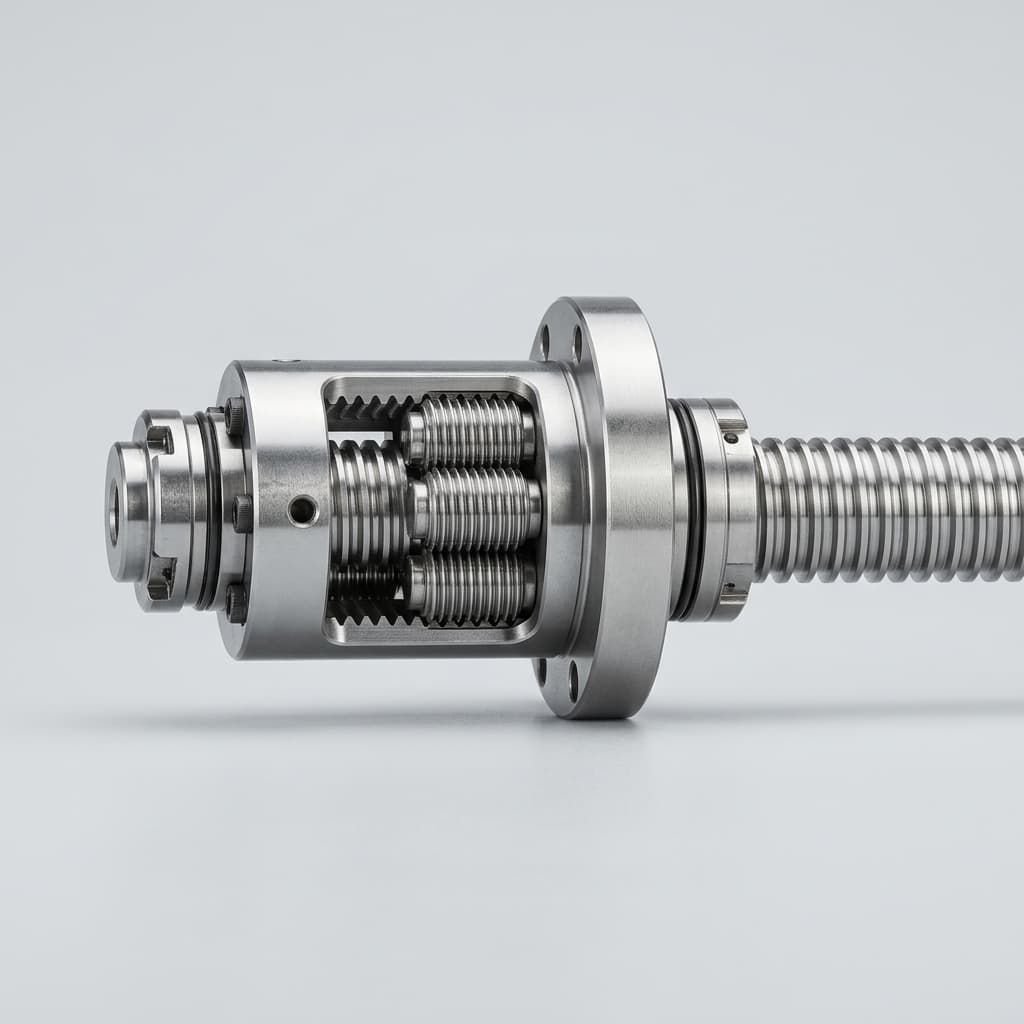
How to Audit and Select a Planetary Roller Screw Manufacturer: A 2026 Procurement Guide
Audit planetary roller screw manufacturers in 2026: verify load ratings, grinding control, testing proof, lead-time risk, TCO, and RFQ package readiness.
Replacing Hydraulic Cylinders with Electromechanical Actuators: A Complete Engineering Guide
Discover why industrial OEMs are shifting from fluid power to electromechanical actuators. We analyze the technical benefits, ROI, and how to successfully size a roller screw actuator for hydraulic replacement.
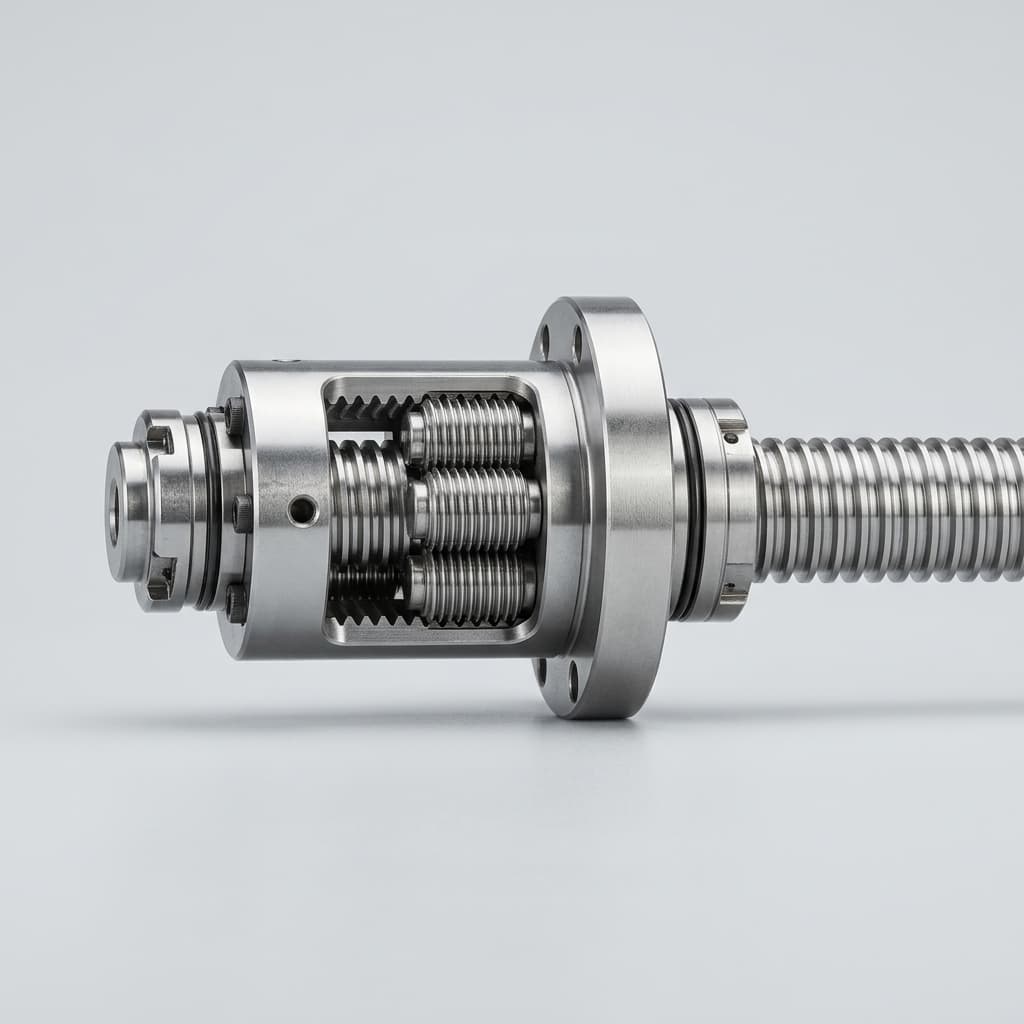
Planetary vs. Inverted Roller Screws: Engineering Differences and Selection Guide
Compare planetary vs inverted roller screws for actuator footprint, load life, sealing, thermal limits, and RFQ inputs. Use the checklist before sourcing.