Start with the sourcing evaluator, then use the evidence tables to decide when a US roller screw actuator supplier is required, preferred, or simply one quote path among several.
This page is not a company profile, directory listing, or affiliation claim. Use the named company website or public business records when the query is brand-specific.
Use this guide to compare domestic-origin evidence, export-control boundaries, quality records, lead-time risk, and RFQ readiness before selecting a supplier route.
Start with the evaluator and RFQ tables so every supplier answers the same origin, compliance, inspection, recovery, and landed-cost questions.
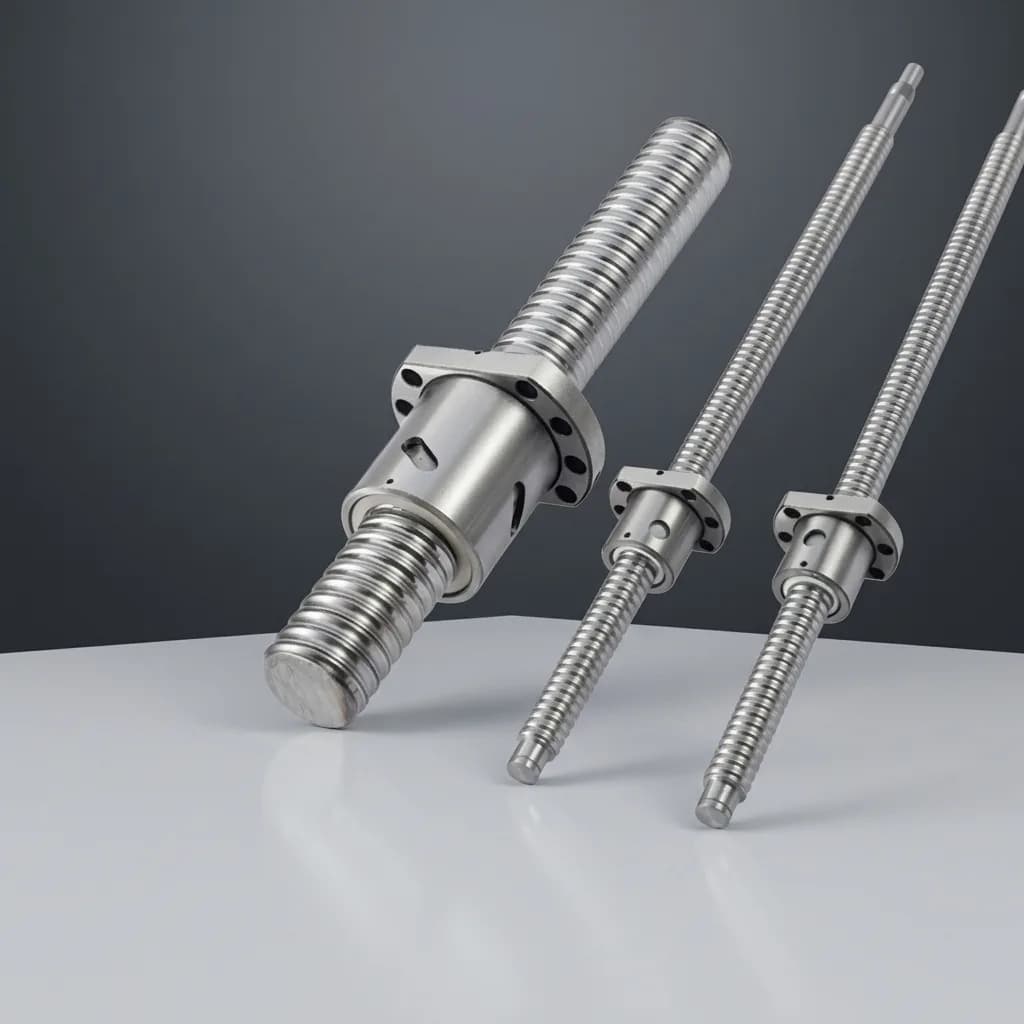
Inspect the actual work package.
Origin and compliance claims should map to machining, assembly, inspection, and the technical-data package.
The evaluator separates regulatory gates from commercial tradeoffs so the sourcing decision does not collapse into unit price alone.
Commercial, aerospace, defense, federal procurement, or mixed-use.
Decide who may receive drawings, STEP files, load cases, and revisions.
Origin, quality scope, traceability, inspection plan, and supplier location.
Unit price, landed cost, inventory, recovery time, and engineering response.
Machining, thread grinding, assembly, bearing-fit preparation, and outgoing inspection can be mapped to the work package before award.
Review manufacturing capabilityCMM inspection, lead accuracy, running torque, material traceability, first-article checks, and functional validation can be specified in the RFQ.
Review quality controlsForce, stroke, speed, duty cycle, life target, drawing revision, and compliance assumptions are reviewed before the quote is treated as final.
Prepare engineering inputsITAR, EAR, Buy American, TAA, DFARS, and customer flow-down clauses answer different questions. Classify the actuator and the technical data before supplier geography becomes a price decision.
Domestic sourcing can reduce freight and communication exposure, but every lead-time claim should be tied to quoted capacity, revision turnaround, first-article records, and recovery plan.
Custom leads, mounts, seals, brakes, sensors, or motor adapters make the engineering feedback loop part of the sourcing decision, not a detail after purchase order release.
Compare unit cost with freight, duties, tariffs, safety stock, quality escape response, warranty recovery, and engineering change speed. Otherwise the comparison is incomplete.
Use this matrix to separate hard gates from commercial preferences. It is a planning aid, not a substitute for legal, export-control, or contract review.
| Application Scenario | Sourcing Action | Decision Value | Limit / Caveat |
|---|---|---|---|
| Defense program or USML technical data | Use a US access-controlled workflow until classification clears | Protects restricted drawings, keeps supplier access auditable, and avoids quote activity that cannot legally proceed. | Final sourcing still depends on item classification, licenses, exemptions, and customer flow-down clauses. |
| Aerospace, space, or critical OEM actuator | Prefer domestic or customer-approved quality suppliers | Improves revision control, first-article planning, material traceability, and engineering response during qualification. | AS9100 or ISO scope must be verified against the actual machining, assembly, and inspection work. |
| Custom prototype or modified mounting package | Use a supplier with a direct engineering feedback loop | Reduces the risk that drawing updates, motor interfaces, or test fixtures are misunderstood before pilot release. | Domestic location helps communication, but the buyer still needs documented DFM timing and inspection scope. |
| Standard commercial high-volume demand | Quote domestic and offshore suppliers on the same template | Keeps unit price, inventory, freight, duty, quality recovery, and service response visible in one comparison. | The lowest unit price can lose value if safety stock, expedite fees, or recovery time are excluded. |
| Federal procurement with origin clauses | Map the exact clause to country-of-origin evidence | Separates marketing origin language from the records needed for award, audit, or customer acceptance. | Buy American, TAA, DFARS, and customer clauses can ask different questions about origin and materials. |
This anonymized procurement pattern shows the decision logic, not a guaranteed lead-time or compliance outcome. It is useful when a buyer must separate supplier geography from technical-data, origin, and inspection evidence.
| Review Step | Evidence / Output |
|---|---|
| Input package | Prototype electric-cylinder replacement, custom mount, controlled customer drawings, and uncertain origin clauses. |
| Evidence requested | Classification note, allowed data recipients, manufacturing and assembly location, material traceability, inspection plan, and first-article scope. |
| Decision boundary | Domestic review path was preferred until data handling and origin requirements were separated from ordinary unit-price comparison. |
| Buyer output | A revised RFQ packet with compliance assumptions, traceability records, revision-control steps, and landed-cost fields shared consistently with suppliers. |
Ask for these records before treating an American roller screw quote as compliant, comparable, or ready for award.
| Record | Why It Matters | When to Ask |
|---|---|---|
| Classification and flow-down note | Defines whether ITAR, EAR, domestic-origin, or customer data-handling limits apply. | Before drawings, CAD, or detailed load cases leave the buyer team. |
| Manufacturing and assembly location | Separates a US sales office from actual machining, grinding, assembly, and final test location. | Before treating a quote as domestic or origin-compliant. |
| Certificate of origin and material traceability | Supports Buy American review, customer audits, and controlled-material questions. | Before award when contract clauses reference origin or material controls. |
| Quality certificate scope and inspection plan | Shows whether the supplier controls the work package, first-article evidence, and revision records. | Before prototype PO and again before pilot-batch release. |
| Landed-cost and recovery model | Makes freight, duty, tariff assumptions, safety stock, rework response, and replacement timing visible. | Before comparing domestic and offshore unit prices. |
The useful comparison is not "US equals safe" or "offshore equals cheap." It is whether each supplier can answer the same risk questions with comparable records.
| Factor | Ask a Domestic Supplier | Ask an Offshore Supplier |
|---|---|---|
| Unit price | Is the quote for the same actuator scope and inspection package? | Are freight, duty, tariff assumptions, and currency exposure included? |
| Engineering change loop | Who reviews drawings and how fast are redlines returned? | How are time zone, language, and revision-control delays handled? |
| Quality escape recovery | What is the replacement, rework, and containment process after a failed inspection? | How long does return, replacement, or local containment take after a defect? |
| Data and origin restrictions | Can the supplier document access control, origin, and quality scope? | Can the supplier legally receive the files and satisfy the contract clauses? |
Compliance frameworks and supply chain parameters were reviewed on July 29, 2026. This page gives sourcing structure; the buyer still needs project-specific classification, contract, and legal review.
| Source / Standard | Context in Actuator Selection | Boundary Note |
|---|---|---|
| eCFR ITAR Part 120 and USML Part 121 | Defines ITAR terms and connects actuator sourcing decisions to USML classification, defense services, and technical-data controls. | The word "defense" is not enough by itself. Classify the item, service, and technical data before sending drawings outside an approved path. |
| BIS Export Administration Regulations (EAR) | Provides the export-control framework for dual-use and commercial items that are not controlled under ITAR. | A commercial actuator can still involve controlled technology, customer flow-down clauses, or destination limits. EAR99 should be confirmed, not assumed. |
| Federal Acquisition Regulation 25.101 | Sets the federal-procurement context for Buy American analysis and domestic end-product review. | Buy American, TAA, DFARS, and customer-specific origin clauses are contract questions. Marketing terms like "American-made" are not enough evidence. |
| SAE AS9100D | Defines an aerospace quality-management standard buyers can use when supplier controls, traceability, and configuration management matter. | AS9100 is a quality-system signal, not an export-control classification and not proof of domestic origin. |
Answers are written for sourcing teams screening American roller screw actuator suppliers, not as legal or export-control advice.
No. ITAR depends on the USML item, defense service, and controlled technical data involved. A US supplier may build both standard commercial actuators and controlled defense program hardware.
Confirm export classification, customer flow-down clauses, allowed recipients, technical-data handling, and whether the drawing package describes a controlled defense integration rather than a standard commercial actuator.
Not necessarily. Buyers should request the manufacturing location, certificate of origin, assembly location, material traceability, and any contract-specific domestic-content evidence required by the program.
It matters when a federal procurement clause or customer flow-down requires domestic end-product analysis. The relevant clause should be mapped to the actuator bill of material and supplier evidence before award.
Lead time should be compared only after compliance, quality records, revision-control scope, freight assumptions, and recovery plans are known. A faster quote is not usable if the supplier cannot receive the data package.
Prioritize domestic sourcing when the project has controlled technical data, frequent design iteration, first-article inspection risk, origin clauses, or a high cost of downtime after a quality escape.
No. Offshore sourcing can be viable for stable commercial demand when classification is clear, origin clauses do not restrict the route, quality evidence is comparable, and inventory can absorb freight or customs delay.
Use the same template for every supplier: unit price, freight, duty, tariff assumptions, safety stock, inspection records, rework response, warranty recovery, and engineering change turnaround.
Request export classification status, quality-system certificate scope, manufacturing and assembly location, certificate of origin, material traceability, inspection plan, revision-control method, and first-article requirements.
No. AS9100 is a quality-management standard. ITAR is an export-control regime. A supplier may need both quality controls and export-control handling, but one does not prove the other.
The catalog actuator may be commercial while the customer-specific drawing, integration model, or defense-system performance data is controlled. Treat the complete data package as the object being classified.
Often, yes. A roller screw electric actuator can replace hydraulics when force, speed, shock load, mounting, duty cycle, brake behavior, and environmental sealing are validated against the machine requirement.
Share the actuator load case, drawing status, expected annual volume, quality clauses, origin requirements, and export-control assumptions. We can help organize the sizing and sourcing review before you freeze the RFQ package.
Inquiry Email
Include force, stroke, speed, duty cycle, life target, quantity, and delivery country.
Send actuator specs to [email protected] or WhatsApp +86 18857971991 for an engineering review.